
Training Your Eye: Five Ways to Become More Confident in Your Design Decisions
One of the most common misconceptions about design is that good taste is something you're either born with or you're not.
I don't believe that's true.
Like any skill, the ability to recognize proportion, quality, beauty, and craftsmanship develops over time. The more closely you pay attention to the spaces, objects, and materials around you, the more instinctive those decisions become.
Designers aren't simply selecting products. We are constantly observing, comparing, editing, and asking questions. Over time, those observations begin to shape our instincts.
The good news is that anyone can strengthen their design eye.
Here are a few of the questions I find myself returning to again and again.
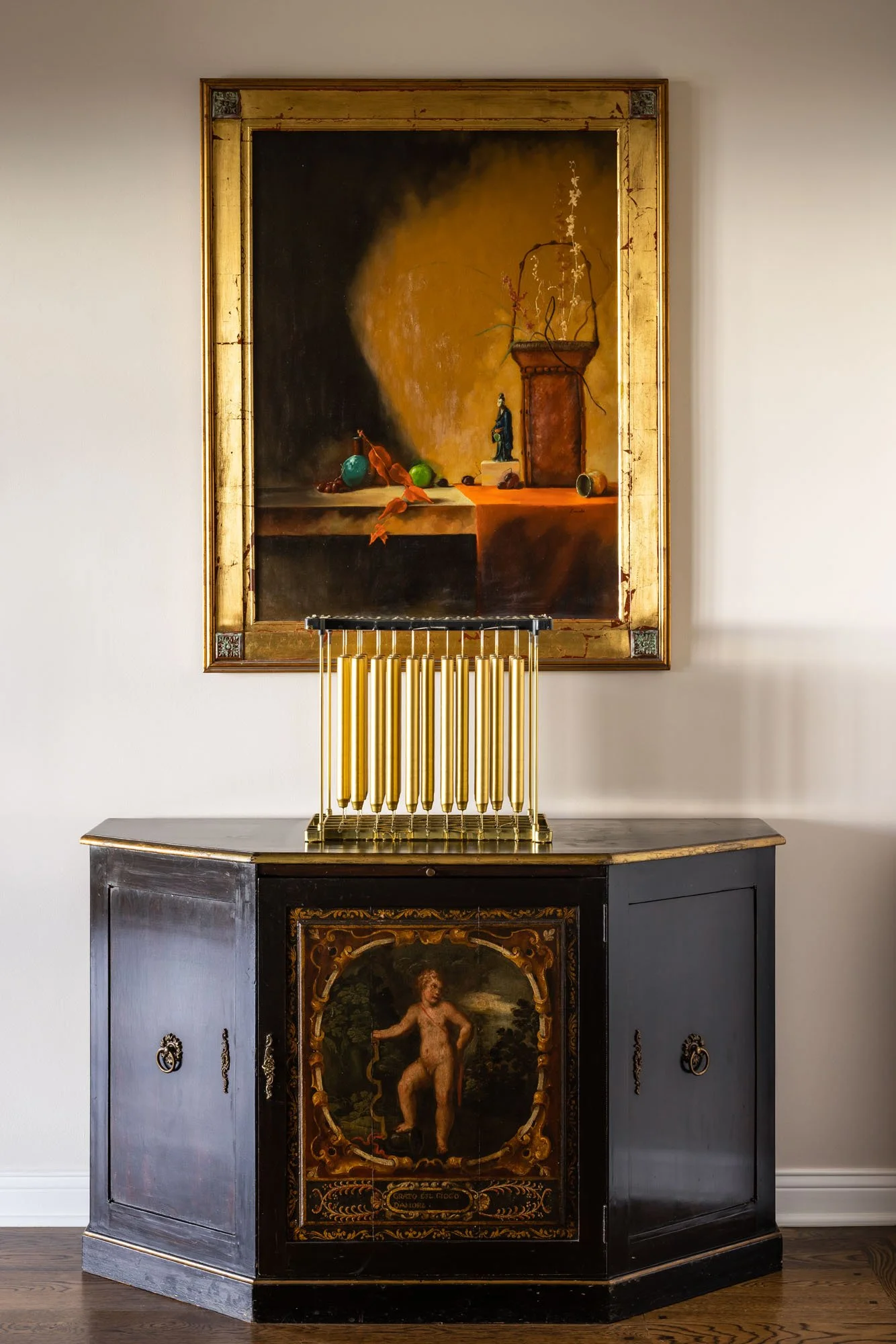
1. Is the shape interesting?
Before considering color, fabric, or finish, I pay attention to form.
A well-proportioned chair, table, vase, or light fixture often remains compelling long after trends have changed. The strongest pieces tend to have a silhouette that stands on its own.
When evaluating an object, try imagining it stripped of its fabric, finish, or color. Do you still like its shape?
2. How will this material age?
Some materials become more beautiful with time. Others reveal wear more quickly.
Pay attention to how a surface will look not only on the day it arrives, but years later. Patina, texture, and age are part of a material's story, and understanding how materials evolve is often just as important as how they look when new.
3. What makes it distinctive?
Not every piece needs to be a statement, but the spaces that feel the most personal often include a few elements that surprise us.
Sometimes it's an unusual finish. Sometimes it's a handmade quality. Sometimes it's simply a familiar object viewed in a new way.
When something catches your attention, spend time understanding why.
4. Could it become more personal?
One of my favorite design strategies is taking something readily available and finding a way to make it feel unique.
A different fabric. New hardware. A custom finish. An unexpected application.
The goal isn't necessarily to make something expensive. It's to make it feel considered.
5. Is it worth keeping?
This question is often more useful than asking whether something is worth buying.
The objects that tend to endure are the ones that continue to reveal themselves over time. They are pieces we return to, live with, and appreciate long after the excitement of the purchase has faded.
When possible, choose things that feel lasting rather than merely new.
Developing Your Eye
The most beautifully designed spaces are rarely built all at once.
They evolve through observation, curiosity, and a willingness to pay attention. The more time you spend noticing the details—the proportions of a chair, the texture of a fabric, the way a material ages—the more confidence you'll develop in your own decisions.
Design is less about following rules and more about learning to recognize what resonates with you.
The eye becomes trained the same way a collection is built: slowly, thoughtfully, and over time.
